Nikko Day Trip From Tokyo
Day Trip Planning

Nikko National Park Day Trip From Tokyo

This Nikko National Park Day Trip From Tokyo guide sets out what a single day realistically covers at the Tokugawa mausoleum complex known in Japanese as 日光東照宮. It frames the figures that decide the plan, the climb at the end of it, and the trade-offs a compressed schedule forces.

8 min read Updated 2026-11-05 Fact-checked
Nikko National Park Day Trip From Tokyo

Quick answer

Yes — Toshogu Shrine opens 09:00–17:00 every day of the week, which makes a one-day return from the capital workable. Admission is 1,600 JPY per adult.

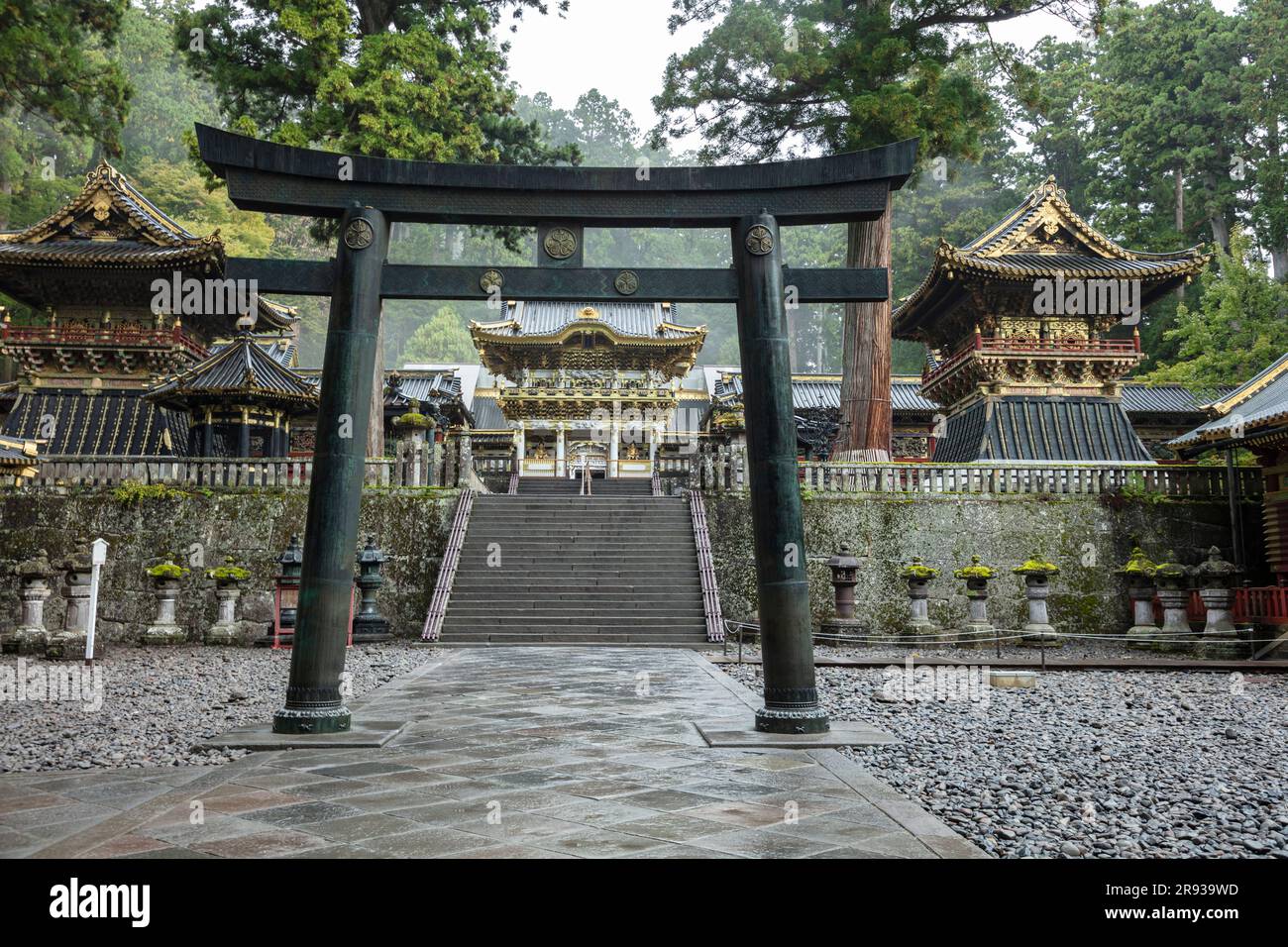
They climb from the main compound to the tomb of Tokugawa Ieyasu, the shogun the shrine was built to enshrine, and they are unavoidable for anyone wanting to reach the mausoleum itself. A Nikko National Park day trip from Tokyo is therefore less a question of distance than of stamina and sequencing. Toshogu does not stand alone. It sits within the Shrines and Temples of Nikko, a UNESCO World Heritage listing that also covers Rinnoji temple and Futarasan Shrine, all reached through the same avenue of cryptomeria cedar and across the vermilion Shinkyo Bridge. Further up the mountain road lie Lake Chuzenji and Kegon Falls, which belong to the same national park but not to the same afternoon. Most 日光東照宮 itineraries fail because they treat these as one destination rather than three or four competing ones. A Toshogu Shrine tour from Tokyo that tries to add the lake usually shortchanges the Yomeimon Gate, the gilded gate at the heart of the compound, and the storehouse carvings around it. The practical response is to decide, before leaving the capital, whether the day belongs to the shrine precinct or to the wider Nikko landmarks. Those choosing the precinct should treat the complex as an unhurried walk on uneven stone, with the steep section at the end rather than the beginning. The stone is worn smooth in places and slick after summer rain. Those adding the lake should accept that the shrine becomes a first stop rather than the day's centre. Either way, the deciding factors are the gate closing time, the crowd curve through mid-day, and the last usable bus or train back — each covered in the sections below. Planned that way, a Nikko National Park day trip from Tokyo returns a coherent visit rather than a rushed circuit of the mountain.

Timing

Optimal Timing for a Nikko National Park Day Trip From Tokyo

The best arrival window for visiting Toshogu Shrine is 09:00–11:00. Arriving during this time helps avoid peak mid-day crowds and ensures sufficient time to explore the complex before daylight wanes.

Spring (April–May)

Moderate crowds

Mild temperatures, 10°C to 18°C

Cherry blossoms bloom, making this a popular time for visitors.

Autumn (October–November)

Heavy crowds

Cooler temperatures, 8°C to 15°C

The fall foliage season attracts significant interest, especially in late October.

Weekday mornings

Lowest density

—

Mid-week mornings provide the most efficient experience for navigating the grounds.

Verdict: Tuesday to Thursday, arriving at 09:00, during April or October.

What to see

Key Structures and Highlights in a Nikko National Park Day Trip From Tokyo

Toshogu Shrine serves as the final resting place of Tokugawa Ieyasu, the founder of the Tokugawa Shogunate. The complex features intricate wood carvings and ornate architecture across several distinct structures.

Yomeimon Gate

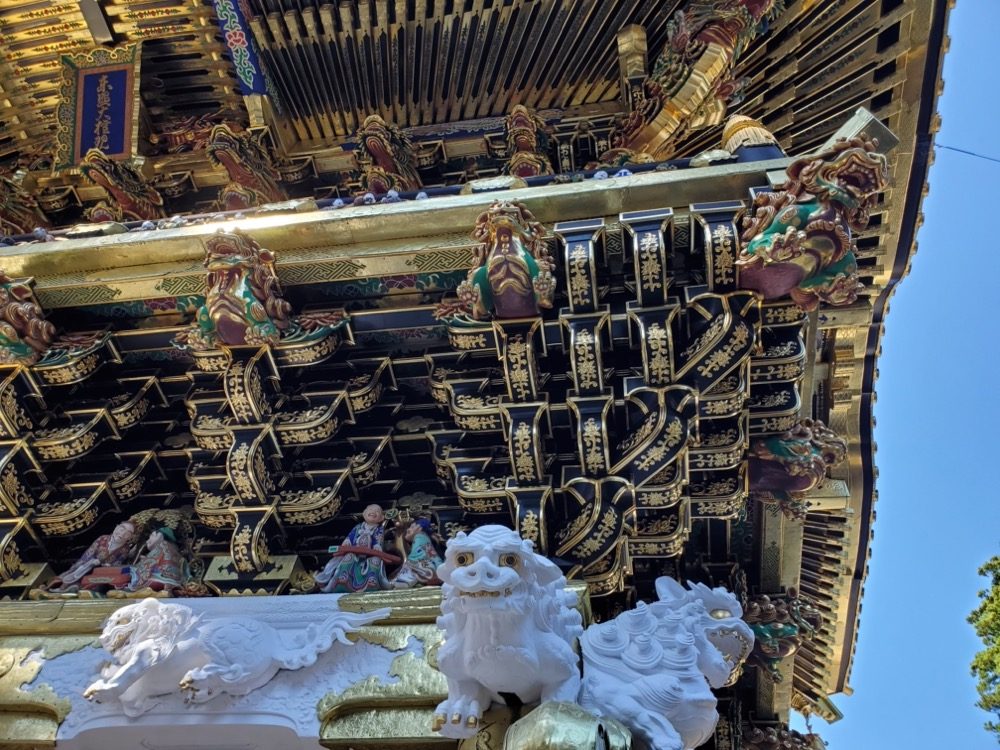
Yomeimon Gate

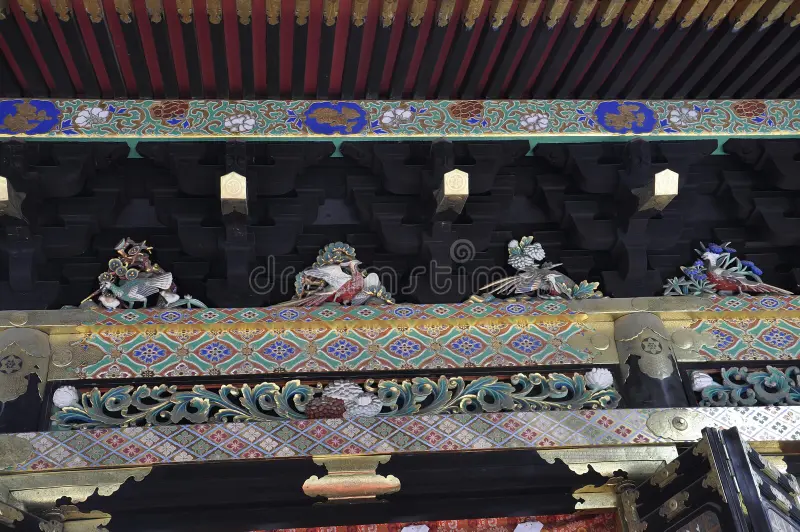
Known as the Higurashi-no-mon, this gate features over 500 intricate carvings including dragons and legendary figures. It is the most elaborately decorated structure in the complex.

Look for the 'reversed' pillar with inverted patterns.
Three Wise Monkeys

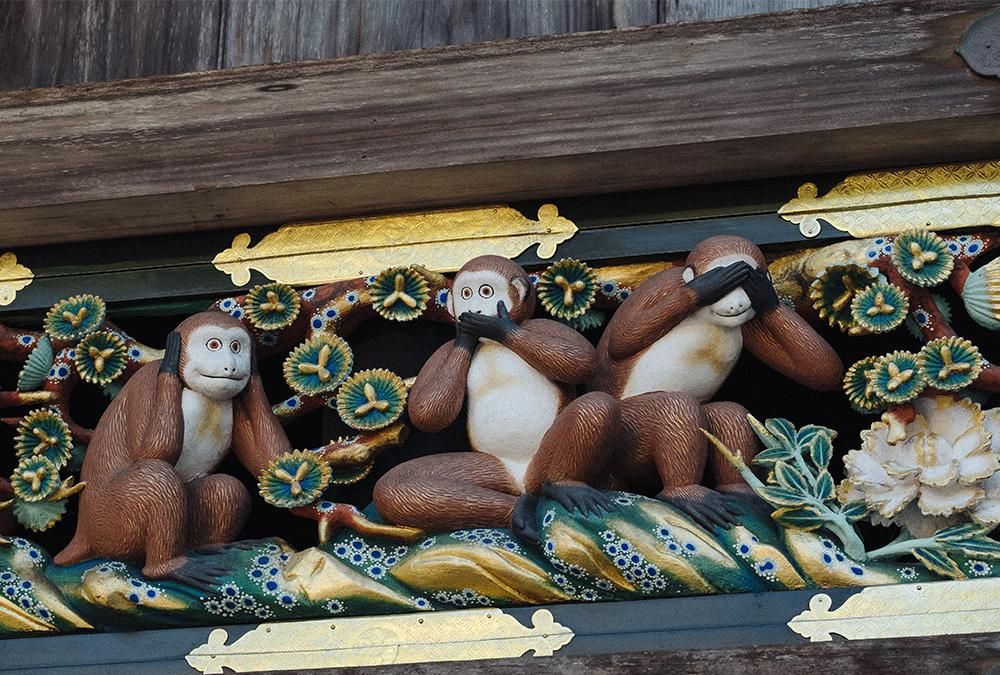
Three Wise Monkeys

These famous carvings illustrate the proverb 'see no evil, speak no evil, hear no evil' on the Sacred Stable. They represent the stages of a person's life.

Observe the carvings on the wooden stable exterior.

Honjido Hall

Honjido Hall

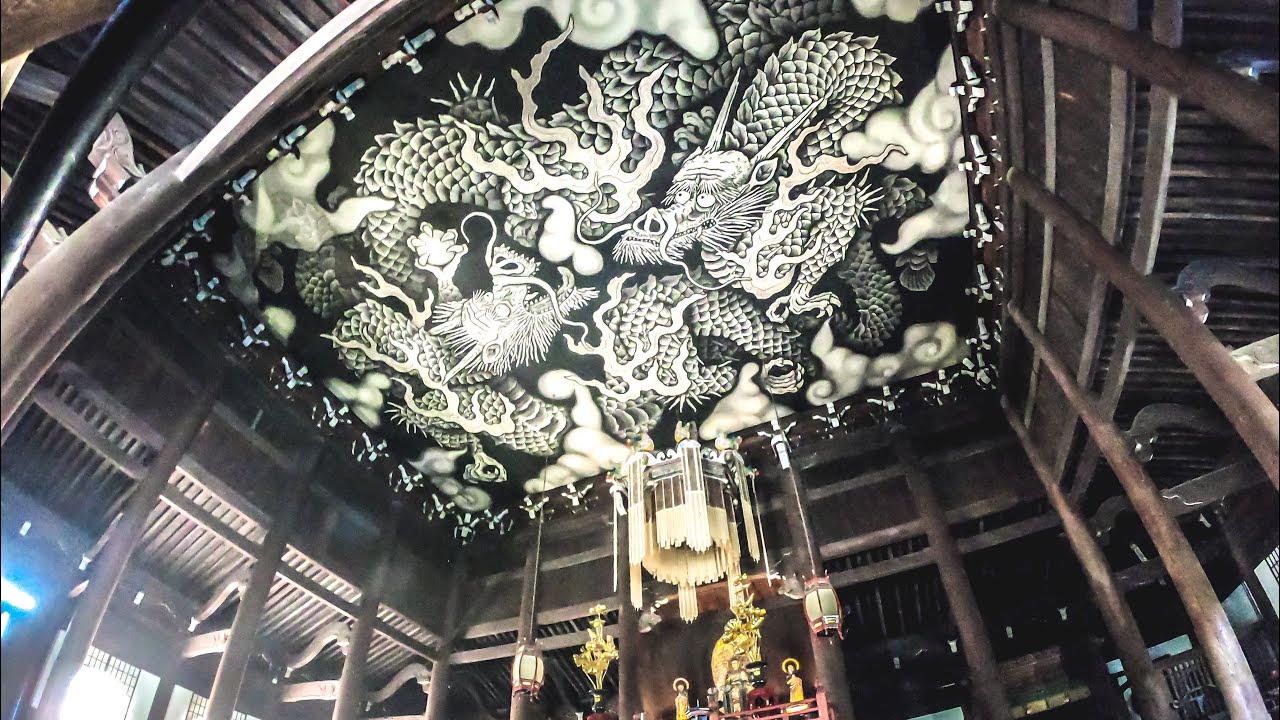
This building, also called the Hall of the Crying Dragon, features a large painting of a dragon on its ceiling. Sound-based demonstrations are held here for visitors.

Listen for the ringing sound when clapping beneath the dragon.

Main Hall and Stone Room

Main Hall and Stone Room

These structures house the core religious artifacts and the interior sanctum of the shrine complex. Gold leaf and lacquer decorate the walls and ceilings.

Note the contrast between the exterior and interior detail.

Sakashitamon Gate

Sakashitamon Gate

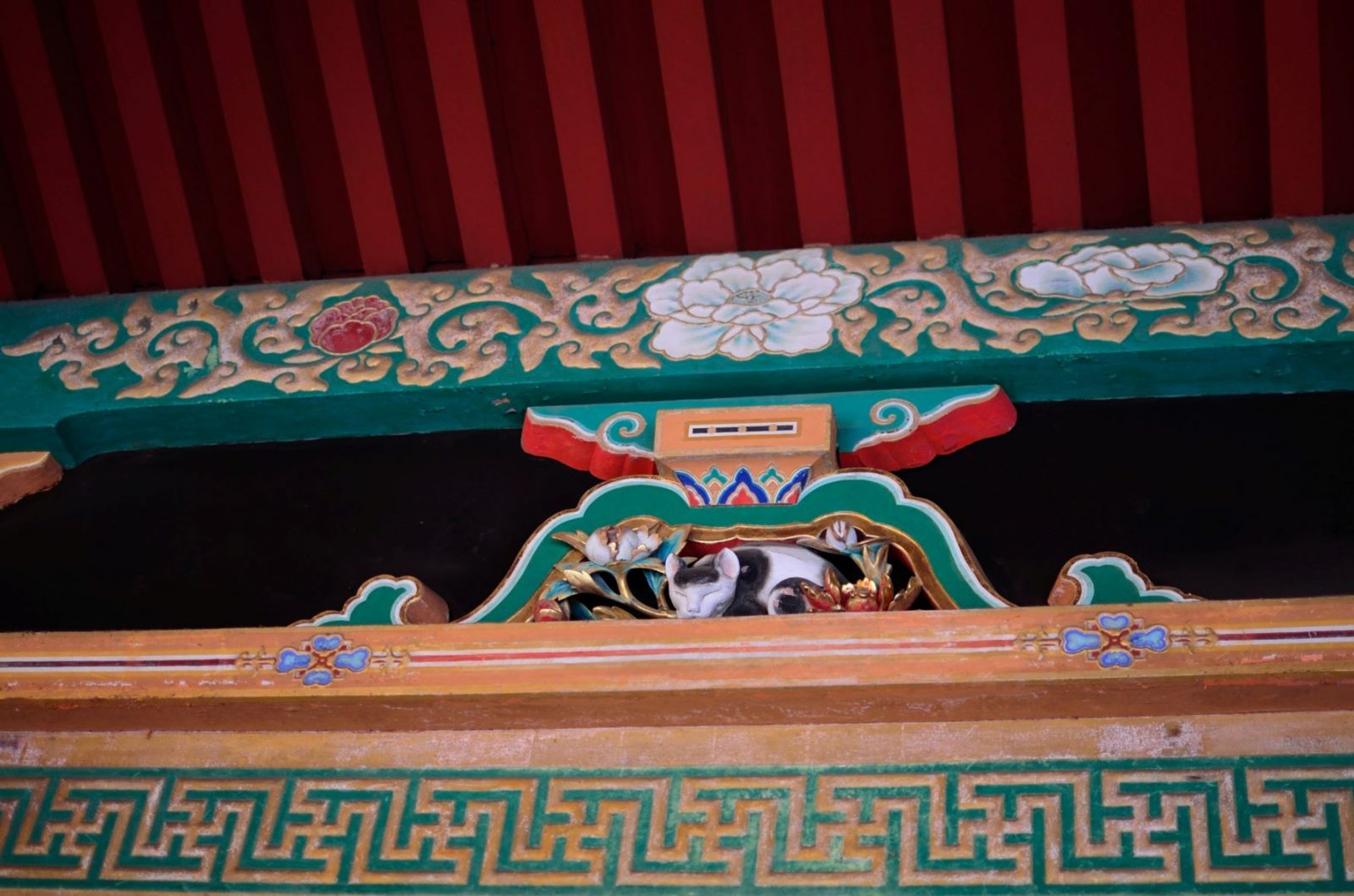
This gate marks the entrance to the path leading up to the Tokugawa Ieyasu mausoleum. It features the famous 'Sleeping Cat' carving by Hidari Jingoro.

Spot the small cat carving on the gate transom.

Etiquette

Etiquette for Your Nikko National Park Day Trip From Tokyo

Toshogu is an active Shinto-Buddhist site, and the Yomeimon and inner halls carry rules that staff enforce on the spot. Knowing the photography limits and hall conduct keeps your visit smooth and respectful of worshippers.

Do

  • Bow once before passing through the torii, then walk to one side
  • Rinse hands and mouth at the temizuya water basin before approaching
  • Remove shoes where signs require it, notably at the Honjido hall
  • Follow staff instructions inside the inner shrine and Nemuri-Neko areas
  • Speak quietly near halls where prayers or ceremonies are underway

Don't

  • Do not photograph inside the Honjido, Haiden, or other roped interiors
  • Do not use flash, tripods, or selfie sticks in crowded passageways
  • Do not touch the carvings, lacquered pillars, or Yomeimon gate ornaments
  • Do not walk down the centre of the sando approach path
  • Do not block the Nemuri-Neko or Three Wise Monkeys for long photo sessions
  • Do not eat, smoke, or drink outside designated rest areas
Book

Check availability

Frequently asked

Frequently Asked Questions: Nikko Toshogu Shrine Visits

Everything you need to know about nikko national park day trip from tokyo

Is a nikko national park day trip from tokyo feasible in one day?

Yes, a nikko national park day trip from tokyo is highly manageable if you start early to account for travel time. Most visitors find that a single day provides sufficient time to experience the main temple complex and surrounding nature.

Keep reading

More guides & pages