
English| EUR
Suggested for you
More currencies
Choose a language
The shrines of Nikko sit deep in the Tochigi mountains, yet two competing railway companies put them within reach of a Tokyo breakfast table. This Nikko day trip from Tokyo by train guide explains how the JR and Tobu networks differ, and what that difference costs in hours on the ground. It also sets out what shapes the day once you arrive: the cedar avenue, the Yomeimon Gate, and the climb to Ieyasu's mausoleum.
Quick answer
Toshogu Shrine opens 08:00–17:00 every day of the week, which is what makes the round trip viable in daylight. Direct limited express services leave Asakusa, while JR routings connect through Utsunomiya, so an early departure leaves a full afternoon inside the shrine complex. Budget for the 1,600 JPY conservation fee and the 207 steps to Ieyasu's tomb.
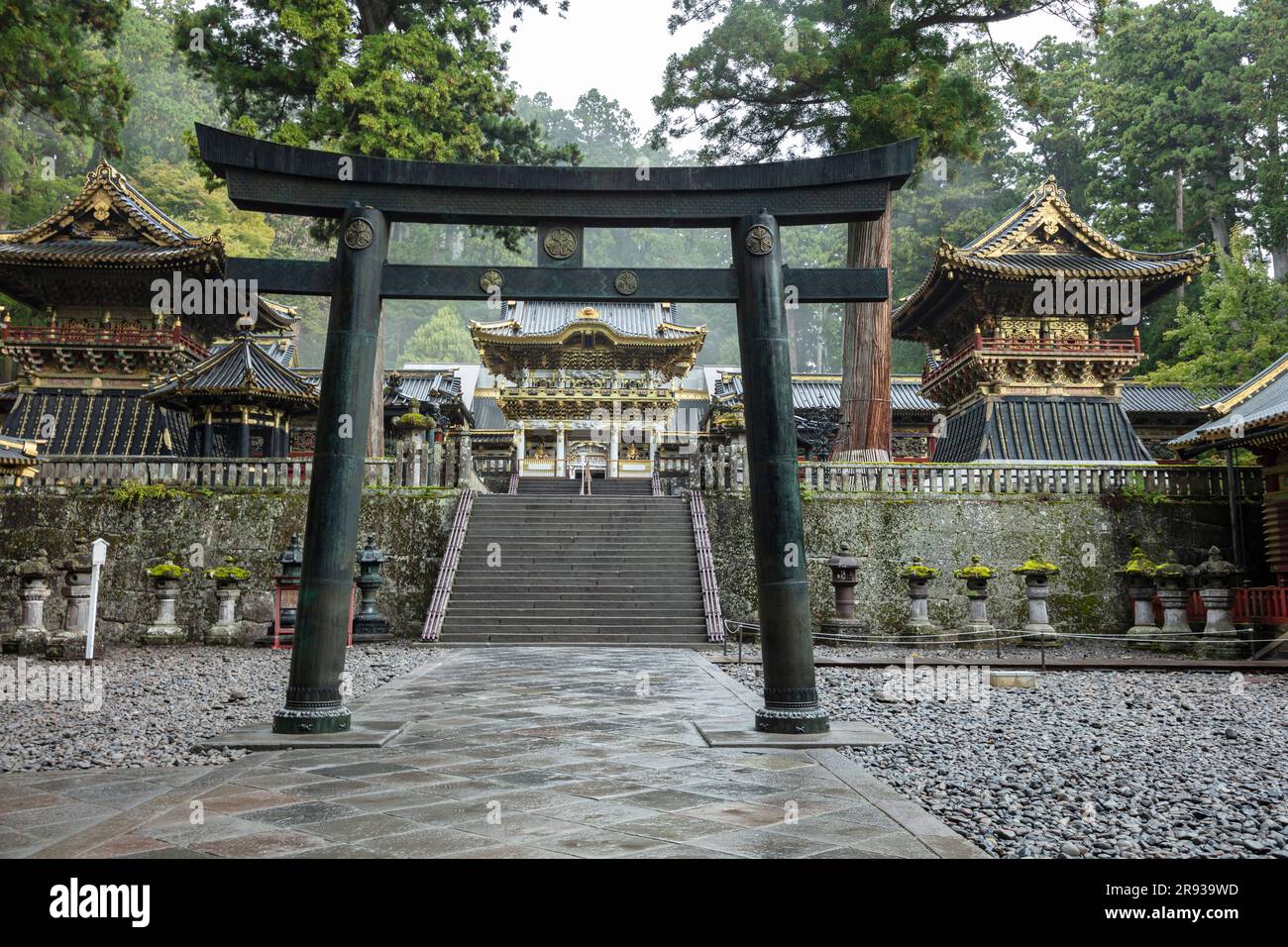
Nikko has two railway stations, and they stand within sight of each other. One belongs to JR East, the other to Tobu Railway, and the rivalry between them goes back nearly a century. That accident of history is the most useful thing to grasp about a Nikko day trip from Tokyo by train. Two operators mean two separate ticketing systems, two departure districts in Tokyo, and two different definitions of a fast journey. The distinction matters because Toshogu closes in the late afternoon, not the evening. Every hour lost to a slow connection is an hour subtracted from the shrine itself. Tobu services leave from Asakusa, in the northeast of the city, and reach Tobu-Nikko without a change. JR routings head north on the Tohoku Shinkansen to Utsunomiya, then double back on the local Nikko Line. Rail-pass holders often favour the second; travellers based near Ueno or Ginza usually find the first simpler. Neither option is wrong. The choice is a trade between transfer count, cost and the station nearest the hotel door. What waits at the far end justifies the early alarm. Toshogu — Nikkō Tōshō-gū in Japanese — is not a single hall but a hillside compound of more than a dozen protected buildings, part of the UNESCO World Heritage listing known as the Shrines and Temples of Nikko. The approach climbs through an avenue of cedars planted in the seventeenth century. Past the Yomeimon Gate, gilded and crowded with carved sages and dragons, a stone stairway of 207 steps leads to the mausoleum of Tokugawa Ieyasu, the shogun the complex was built to enshrine. The Sleeping Cat carving marks the foot of that climb. Rinnoji temple, Futarasan shrine and the vermilion Shinkyo Bridge stand within walking distance. Most visitors treat the shrine as the anchor and arrange everything else around it. Anyone planning a Tokyo to Nikko rail excursion should work backwards from closing time rather than forwards from breakfast. The sections below carry the timetable-level detail: which line suits which traveller, what the day costs, how the hours fall, and how a workable itinerary fits together. Taken together, they turn a Nikko day trip from Tokyo by train from a logistics problem into a single early departure.
“Two operators mean two separate ticketing systems, two departure districts in Tokyo, and two different definitions of a fast journey.”
Nikko is accessible from central Tokyo via two primary rail operators, Tobu Railway and JR East, which provide distinct routes to the Nikko area. Choosing between them depends on your departure point in Tokyo and whether you prioritize direct access to the shrines or JR Pass compatibility.
Tobu Nikko Line from Asakusa Station to Tobu-Nikko Station
JR Tohoku Shinkansen to Utsunomiya Station, transfer to JR Nikko Line
Tobu Bus from Tobu-Nikko or JR Nikko Station to Toshogu area
The best arrival window is 08:00–10:00 to avoid mid-day crowds and tour groups. Upon arrival at the stations, local buses provide frequent connections to the Toshogu Shrine vicinity.
This plan suits day-trippers leaving central Tokyo on an early train and returning the same evening, with roughly four hours on the ground in Nikko inside a 12-hour door-to-door day. It assumes you walk the shrine grounds at a steady pace rather than rushing between buildings.
Board the first practical northbound service so you land in Nikko within the 08:00–10:00 arrival window. Buy any reserved seat the day before, since morning departures fill quickly in autumn.
Allow 10 minutes to clear the platform and find the bus stop or the start of the walking route. Grab water here, as options thin out once you climb toward the shrine precinct.
Reach 2301 Sannai on foot in about 25 minutes uphill, or shorten it with a short bus ride. Cross the Shinkyo bridge area en route for a first view of the Daiya River.
Pass through the main gate and the Five-Storey Pagoda, then the three sacred storehouses and the Sacred Stable with its carved monkeys. Budget 30 minutes and expect a short queue at the gate.
Climb the 207 steps in stages toward the Yomeimon gate and the inner courtyard, where the carving detail rewards a slow lap. Around 45 minutes, with the lightest crowds before 10:30.
Take the cedar-lined stair to Ieyasu's tomb, then return via the Honjido hall to hear the Crying Dragon acoustic demonstration. Roughly 50 minutes including the wait for the next group.
Eat along the road back toward the station, where yuba dishes and soba are standard. Keep it to an hour to protect your return margin.
Head back with 20 minutes buffer at the station for platform changes and ticket checks. Arriving mid-afternoon avoids the commuter squeeze on the final leg into the city.
The best arrival window for a Nikko day trip from Tokyo by train is between 08:00–10:00. Arriving during this period allows visitors to experience the historic architecture before the influx of mid-day tour groups.
Mild; 10°C to 20°C. Cherry blossoms bloom mid-April.
Visit mid-week to avoid holiday congestion. The climate is comfortable for walking the 207 steps.
Cool; 8°C to 18°C. Vibrant foliage peak late October.
Expect high foot traffic throughout the shrine grounds. Early morning arrival is essential for quiet viewing.
—
Arriving at 08:00 minimizes wait times at the entrance. This provides the most unobstructed access to the site's detailed carvings.
Verdict: The optimal time for a Nikko day trip is Tuesday to Thursday, arriving at 08:00, during the months of April or October.
Access to Nikko Toshogu Shrine requires a conservation fee. This cost is separate from the transit expenses incurred during your train journey from Tokyo.
Verdict: A typical adult pays 1,600 JPY for entrance, with the final cost determined solely by the age of the visitor.
Toshogu Shrine is open daily throughout the week. Visitors can access the grounds according to the following schedule.
The terrain at Toshogu Shrine presents significant challenges for visitors with mobility concerns due to the historic architecture and mountainous landscape. A total of 207 steps are located within the site, which limits independent access to many areas.
Main paths are gravel or stone and often steep.
Extensive stone staircases connect the primary shrine buildings.
Facilities are available near the shrine entrance and parking areas.
Visitors should arrive between 08:00–10:00 to avoid mid-day crowds.
Everything you need to know about nikko day trip from tokyo by train
Planning your journey involves choosing between JR lines and Tobu Railway services departing from Tokyo. You can find detailed routing information in our transport guide to ensure a smooth transition from metropolitan Tokyo to the mountains of Tochigi.
The entrance fee for Toshogu Shrine is 1,600 JPY per person as a conservation fee. This payment is collected at the site entrance to support the maintenance of this UNESCO World Heritage site.
Toshogu Shrine is open daily from 08:00 to 17:00 throughout the week. Please plan your visit to ensure you have sufficient time to explore the historic architecture before closing.
A nikko day trip from tokyo by train is straightforward when using the major rail operators that connect directly to Nikko station. By following our arrival suggestions, travelers can easily transition from high-speed rail to local buses serving the main temple area.
To avoid peak mid-day crowds and tour groups, the best arrival window is between 08:00 and 10:00. Arriving early provides a quieter experience while viewing the ornate carvings and complex wood structures.
Yes, the access route includes 207 steps, which are part of the path leading through the historic shrine grounds. Comfortable footwear is recommended for navigating these stone stairs and the surrounding shrine complex.
The primary operators are JR East and Tobu Railway, which provide access to Nikko via different terminal stations in Tokyo. Detailed information regarding these routes and connections can be found in our dedicated transit section.